Warning: Simplified spelling ahed ... They're not typos!
Why?
The question arises every so often, “Why do we hav a Space program?” Usually it is followed by another phrase like, “That money could be better spent for ....”
To Space Advocates, having a space program requires no justification other than it exists. Space Advocates dream of the day that interplanetary travel or even interstellar travel is routine. Whether they are a Star Trek utopian or a Browncoat libertarian, they see a space program as the necessary and natural course of events.
 |
| International Space Station |
Advocates come back with the standard litany of spinoffs, prestige, national pride, inspiration for the children, asf. But the truth is that all the technologies likely would hav come to light sooner or later without NASA. And besides, they’v happened. They’re past tense and there is no guarantee of future development.
NASA has enjoyed a good reputation that has kept it from being cut to pieces tho not shielded it altogether from cuts. However, we’v never faced a budget crisis like we do now. The new “Age of Austerity” will soon be welling higher premiums for Granny’s Medicare. How do we justify to Granny that she must pay higher Medicare premiums while we spend billions so that an elite few can float about in Space?
I know what you’re going to say ... NASA’s budget is less than 1% of the total amount spent by the U.S. government. Cutting NASA won’t stop the premium increase. True but irrelevant. Granny doesn’t give a hoot about some esoteric science project to measure global warming, telescopes in Space, or dark matter. Unless she works at a chicken farm, she doesn’t care that a vaccine for salmonella came out of the research on the Space Station. Granny likely knows that we went to the Moon many years ago but can’t even do that now so she wonders just what the heck are we spending those billions on when it could be going to her Medicare instead?
Purpose
In the Age of Austerity, exploration of Space needs to pass the Granny test. How will the money spent in Space help her? It needs to be something that she can easily relate to and something that straightforwardly begoes her. Only a personal purpose will drive Granny to back a major human space mission.

Is this even an serious threat? Even tho NASA believes that it has located 90% of the asteroids, that 10% is still a huge number of unknowns swirling around out there.
In January, 2010, international experts met in Mexico City to discuss “the best way to establish a global detection and warning network to monitor potential asteroid threats to all life on Earth.”
In June, 2010, Representative Dana Rohrabacher (R – CA) introduced H.R. 5587, titled: "To establish a United States Commission on Planetary Defense and for other purposes."
In August, 2010, some scientists foreset ATLAS, short for the Asteroid Terrestrial-impact Last Alert System, which calls for two telescopes to serve as an early warning system against incoming asteroids. The scientists “hope such a system could provide many hours or days notice of an impending Earth impact.” Days or hours? That won’t giv anyone much time to do anything but run.
UPDATE 20 Aug 2011: There is a Planetary Defense website.
The Russians are being a little more aggressiv. Russia is considering a plan to launch a spacecraft capable of moving the mikel asteroid Apophis in a bid to shield Earth from an impact. Luckily, it’s not due for about 20 years and may not be a threat. But at least the Russians are on the right track. They know that we need to start working on the technology now.
OK, so it does seem that there is a might-be of an asteroid hitting Earth and causing significant harm. Does this pass the Granny test? I think so. If you tell Granny that there are some big, honking asteroids buzzing about that could crash down on her house in her lifetime, she might be willing to look elsewhere for her premium money. If she still isn't convinced, then breakout the trusty old laptop and show her some pretty amazing videos of tiny asteroids that put on a fiery show.

Here are a few:
Edmonton meteor Nov 2008
Meteor lights up sky in S. Africa 21 Nov 2009
Fireball lights up Midwest sky 14 Apr 2010
Organization
In the past I haven’t been an internationalist in the sense that I think international cooperation was a firstship of a space program. I didn’t feel the need to go out and find an international partner for projects. Many of us thought that Neil Armstrong's one small step would be the beginning of a new age of exploration ... of American exploration ... keeping our great tradition of settling a new frontier. But alas, it turned out to be a high water mark as short-sighted politicians began asking one variation or another of the same ol' frain, "Do we need to spend billions on a space program when we have so many problems to solve on earth?"
Eathseen, I think the answer is yes, we do need to spend the gelt. But this time it is a little otherly. Everyone on the planet has a stake in this. But that doesn’t mean that every country needs to be involved. I’m thinking that a moot, gemoot, consortium, league, federation, or confederation (but not Alliance as that has a negativ connotation among the Browncoats) ... pick your name ... of the current spacefaring nations should oversee this project. They’re the ones with the technology and the money.
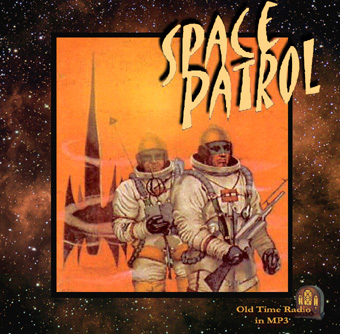
Nor do they all need to be PhDs and engineers. We have well-trained Sailors that handle the nuclear engines just fine on their ships, this would be no otherwise. And like our Navy, the members of the Patrol must be willing to thole long tours of duty except there will be no ports of call in Space ... at least not at first.
Further, the Patrol headquarters itself should be in Space. Mayhap on a space station in low earth orbit (LEO) or at Lagrange Point 5 (L5) or on the Moon. It may begin with a small station in LEO and later move. This will get rid of any debate among the members of the Consortium as to which country or countries will host the headquarters and burocracy of the Space Patrol. It will also lessen the tendency of an earthside Space Patrol burocracy that becomes more interested in its own comfort than the mission and it will help to keep the focus on Space.
The errand, that is mission, of the Space Patrol will be to find and turn away any asteroids that pose a threat to Earth. It can have secondary errands of clearing out debris in LEO and rescue missions.
So how does this help us in the "Age of Austerity"? I see the Consortium being set up by a treaty among its members and thus would require, in the US, strong bipartisan support to get it yeasaid in the Senate. In order to get that bipartisan support, you'll need not only to convince Granny but the senators as well. Could we get away with just "agreements" and "contracts"? Maybe, but then you'd risk the future support as they would be easier to pull out of or ignore.
As part of the Consortium Treaty (still not going to call it the Alliance!), the members would pledge not only technology but a set amount for X years that could be raised by agreement of the membership. Let's say that the US pledges $20 billion/yr for 10 years ... I know, that's more than NASA's current budget but it is a pittance of spending. Remember, this is not some esoteric science project like most of NASA's projects are. But rather, this is an ongoing errand to literally save the world. If China is on board, they could likely easily match that amount. The Russians, the Europeans, the Japanese ... Pretty soon we'd have some real money to actually get this done. If all pledge $20 billion/yr then just from those five that would be $100 billion/yr for 10 years for a total of $1 Trillion. With that amount of money plus technology and other backing from the Consortium nations, we could get this set up and running within 10 years.
But, you say, they'll just take it from NASA. Maybe. However, remember, that technology and other support is part of the pledge. NASA, as would the ESA and the space agencies of the other countries, would still have a role to play in funding kenseek, that is research, for needful technology and they have other scientific research to do as well.
What about exploration?

A program that is robust enuff to rendezvous with an asteroid and deflect it would also be robust enuff to exploit it. So gathering raw materials from asteroids might not be too far off in the years to come. Again, this is not a job or purpose of the Space Patrol but there is no reason that private enterprise couldn't buy or build the the same kind of ship and adapt it for its own needs.
What about Mars? Getting to the surface of Mars would not be a priority of the Space Patrol but I could easily see the final shakedown cruise of a ship with either a nuclear-powered Pratt & Whitney TRITON engine or a 200 MW VASIMR engine going to the moons of Mars to practice rendezvousing with an asteroid since the creator of the VASIMR claims he could get to Mars in 39-45 days or maybe a slower 12 MW engine in four months.
Endsay
Obviously I can't put forth all the details in one short blog. Tho I do hav thoughts as to how things should go if we move forward.
The danger is that we won't go forward. We are on the edge of entering a Dark Time for human space flight beyond LEO. NASA's budget is not only be frozen as a budget saving measure but short-sighted congressmen are already lopping off $298 million for local, non-federal pet projects (see Update 3 below $2 billion slashed). Expect this to happen again and again. Without a clear errand for being in Space, we will, at best, keep on the same flexible path to nowhere that we'v been on for 40 years. The technology will keep coming out as it has for the past 40 years, but the will and funding to actually go beyond LEO will be lacking.
Yes, commercial interests will eventually push beyond LEO, but I'd like to see something happen before my 100th birthday! And there is still the threat of a rogue asteroid appearing out of the Dark!
A World Asteroid Shield (WAS) against a rogue asteroid would give mankind a definit, recognizable, and defendable purpose for being in Space and, at the same time, it could breath new life into moving humanity beyond LEO in an ongoing and maintainable way in the near years ahead.
---
UPDATE 1, Thursday, 03 Mar 2011: I need to clarify a point or two as a few folks who have written me seem to have missed the point entirely and somehow twisted this foreset to be pro-government, anti-private enterprise. Nothing could be further from the truth. Private enterprise in Space would have to grow to upstay the Space Patrol. The SP would not be a kenseek and upbuild organization!
Further, the existence of the Space Patrol would not hinder the development of private enterprise in Space such as space tourism or mining operations.
This foreset, if done the way I see it, would speed up and enhance private enterprise in Space. For byspel, let's say the budding space tourism grows to include a cruise that goes umbe the Moon ... something like that would be quite spectacular. If the Space Patrol has a base in orbit (or on the Moon itself) and is available for rescue errands (a secondary errand to the worldwide shield), then it takes a huge burden off the firm to always have a second, standby ship crewed and ready to go. Which would mean actually having three ships as one would be in upkeep, one on standby, and one actually earning money. That alone could be so expensiv as to kill the thought before it got started. But having a Space Patrol available for rescue errands would push the thought along. After all, a Patrol vessel capable of rendezvousing with an asteroid should hav no problem tracking a crippled vessel and meeting up with it.
I hope that helps clear things up a bit.
UPDATE 2, Thursday, 30 Jun 2011: Scientists reveal asteroid hit list. Among the countries which face devastation to infrastructure are Canada, the US, China, Japan, and Sweden.
UPDATE 3, Thursday, 07 Jul 2011: CJS subcommittee slashes nearly $2 billion from NASA's budget.
UPDATE 4, Thusday, 11 Apr 2013: "... a meteor streaked across the sky and blew up, injuring 1,100 people ..." USA Today, 15 Feb 2013. Hat tip to Glen Reynolds for the link in his writ: Combating the Asteroid Threat.
.


A minor quibble: You mention asteroids colliding with Earth. Most of the ones in and around the asteroid belt have already been identified. Any undiscovered ones are likely to be quite small.
ReplyDeleteThe real threat is comets. A large one could suddenly appear from deep space at any moment. In 1996, Comet Hyakutake was discovered when it was around the orbit of Saturn. Less than two months later it passed 10 million miles above the North Pole. That proved that a comet could be on a collision course with Earth and we could have as little as two months' warning.
As I said in the article, about 90% have been identified. Unfortunately, that still leaves over a 1,000 that have not ... And if we haven't identified them, then how can we know how big or small they are?
ReplyDeleteComet or asteroid ... makes little difference to me. The justification is the same. Do we want to risk it or be ready for one?
Obviously, I think we need to be ready.
Though you may be putting the word in the mouths of others, esoteric is more offensive than even corrupt, as it trivializes space, which I see otherwise you would not seek to do. That aside, asteroids and comet remnants in the form of ice balls in asteroidal orbits are the keys to a permanent human presence in space. Asteroids of various sizes spun up for artificial gravity and accessed along the axis of spin without the disadvantages of fighting through a gravity well and supplied with water and fuel by those aforementioned ice balls are the space stations and space ships of the future. At this point, with the vast excesses of the SLS/Orion, commercial space is the only way such a vision can or will be fulfilled. We have no need for anything much larger than the Falcon Heavy to build that permanent presence where missions are assembled and tested in space before being sent on their way. We will need such asteroidal stations at least at two levels, LEO and GSO, with some in between and surely some at EML1, 4, and 5 as well as at other critical points in the solar system and beyond. Nuclear powered VASIMR-type tugs should handle all but the most time sensitive short jumps and almost all the longer jumps. If we wish to access the Moon or Mars on a regular and efficient basis, current materials are capable of supporting elevators to those locations, though for many reasons, both technical and political, I do not foresee a Clarkeian Earth elevator on any near date.
ReplyDeleteSo comets and asteroids can be both motivation and means.
I hav no quibbl with mining the asteroids but that is putting the cart before the horse. Mining, smelting, and working the ore into metal and then building with it only become fremful if we are in Space in a big way to start with ... thus the Space Patrol. I hope that the SP will be the jumpstart needed.
ReplyDelete